A TABLE BY PHILIP AND KELVIN LAVERNE EXPRESSES THE DELICATE HARMONY THAT CAN BE ACHIEVED BETWEEN THE ARTIFACTS OF ANTIQUITY AND MODERN DESIGN
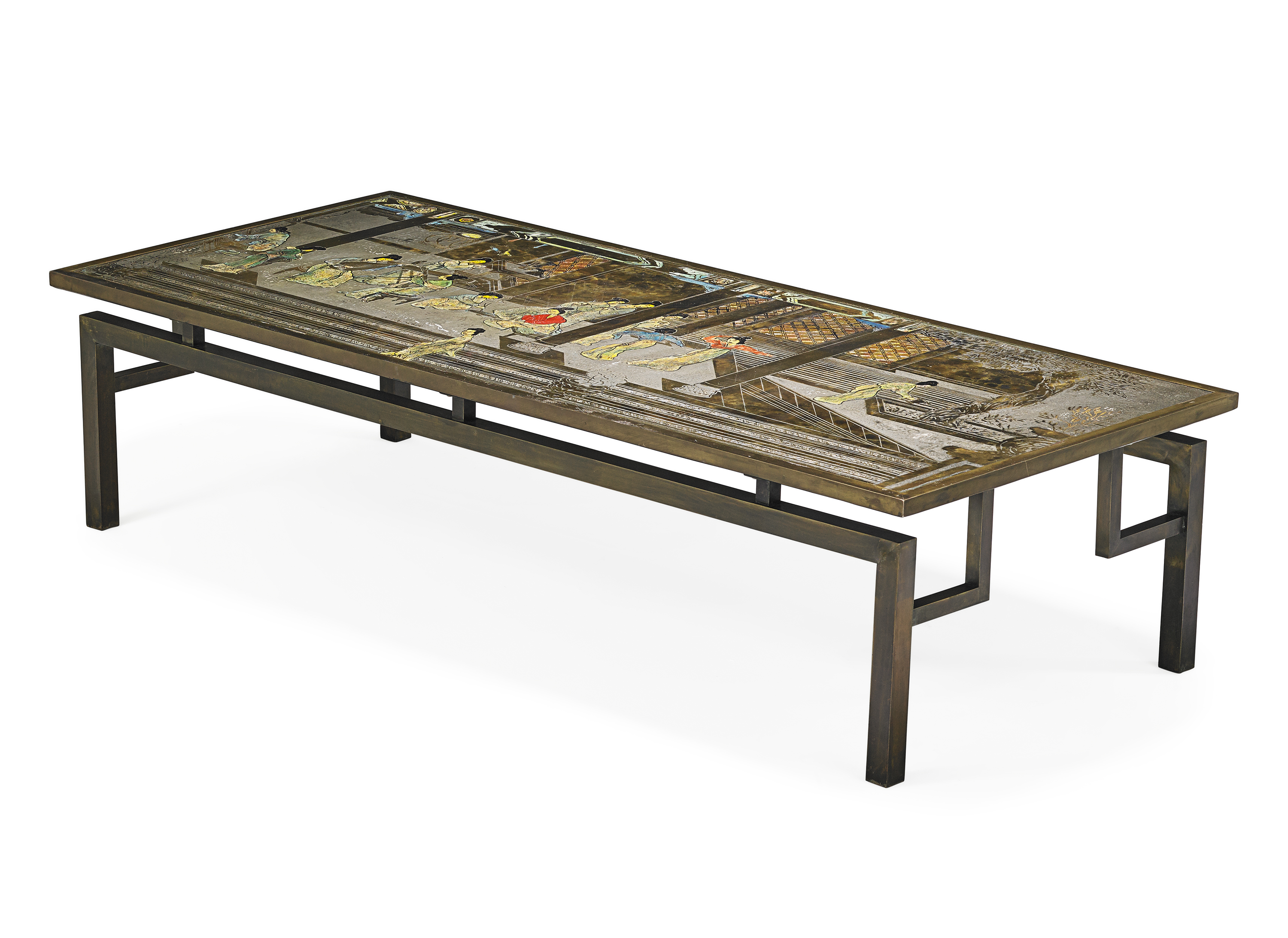
LOT 1030 Rago’s Modern Design sale, June 7, 2015: Chin Ying coffee table designed by Philip and Kelvin LaVerne, 1960s. Estimated at $5,000–$7,000, the piece sold for $13,750. Some reasons for the high price:
LAVERNE, SURELY
The father-son design team of Philip and Kelvin LaVerne melded sculpture and furniture, often creating one-of-a-kind pieces. After training at the Art Students League in New York, Philip dabbled in businesses creating furniture and casting porcelain, brass, and bronze; Kelvin studied art history, metal sculpting, and furniture design in Paris and Florence. The two melded these skills in the 1950s, experimenting with bronze to create low-relief sculptures as decorative elements for functional pieces—“functional art,” as they called it. They worked first at a studio on 100 Greene Street in New York’s Soho neighborhood before moving uptown to 46 East 57th Street, the address on much of the documentation surrounding their work. What emerged from their work together is a highly distinctive aesthetic that is at once an homage to the art of the past and a celebration of modern craft and functionality.
ON THE STEPS OF THE PALACE
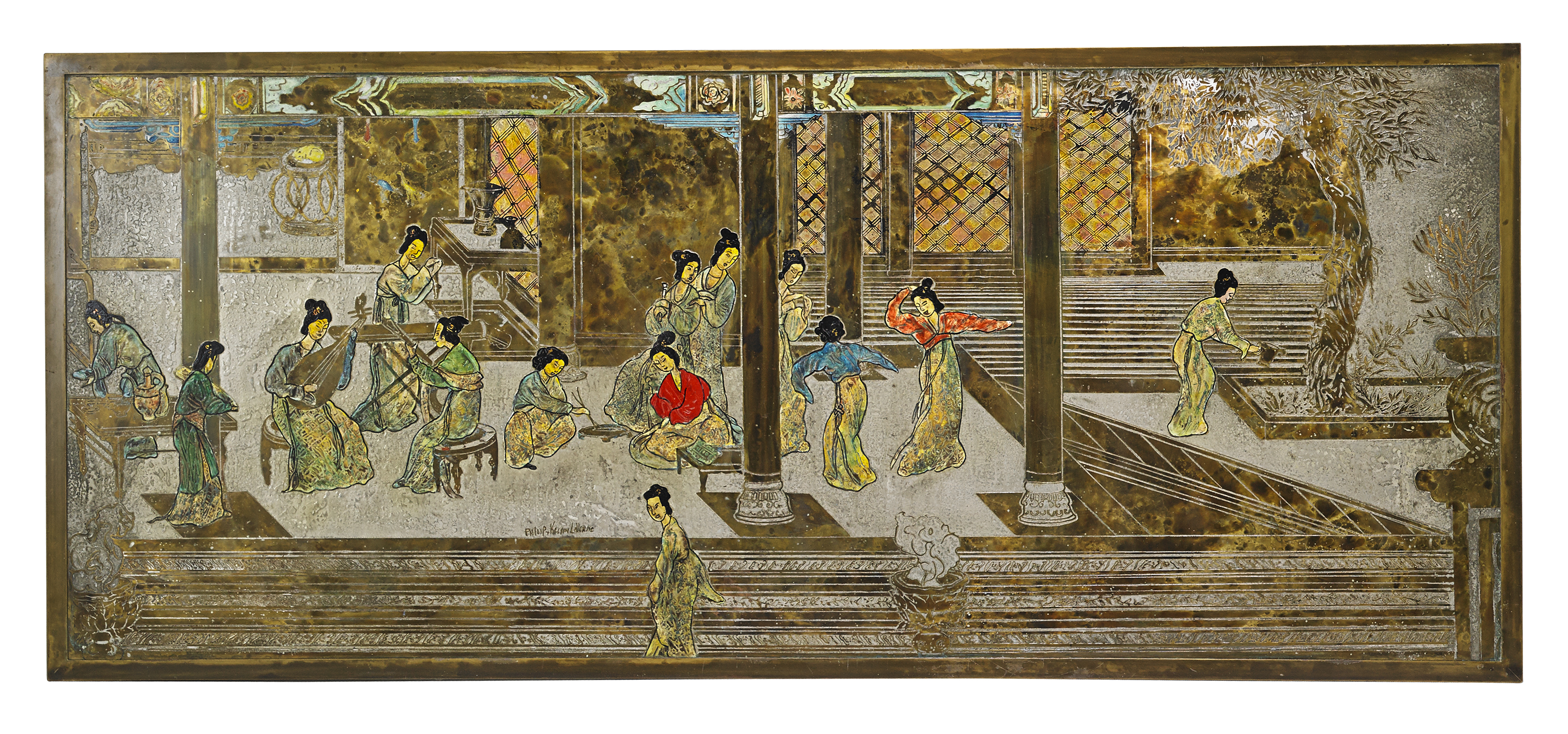
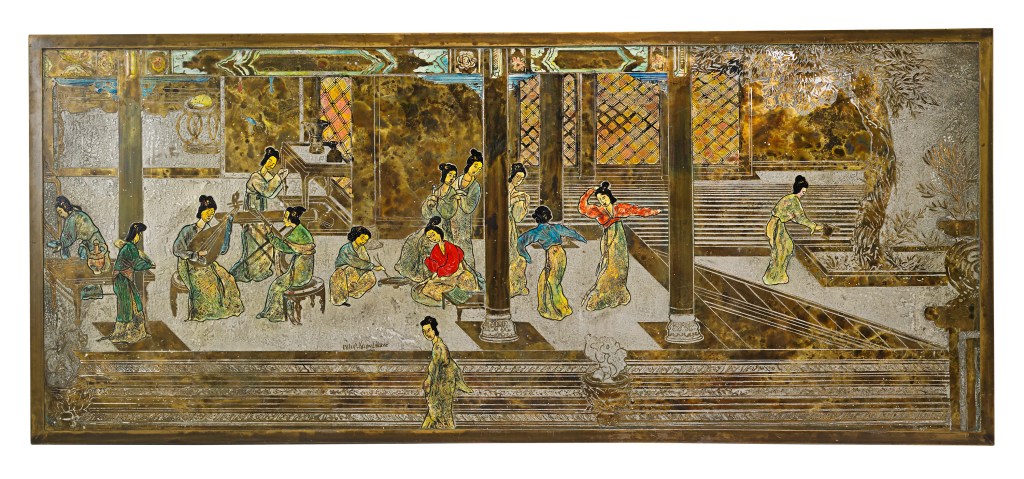
Much of the imagery found in LaVerne pieces is derived from the classical, with pastoral scenes from antiquity and Eastern cultures serving as popular themes. These motifs are often echoed in the structure of the furniture pieces, from elegant architectural elements to full-relief caryatids as legs. The imperial palace of the Qin (Chin) dynasty is the site of this table’s tableau. Women dressed in the garb of the Chin period decorate the steps, celebrating the rite of spring, a Confucian ritual offering of soil and grain. While not the rarest piece by the LaVernes, the table features one of their more sophisticated shapes. Jad Attal, specialist in twentieth- and twenty-first-century design at Rago, notes that the “naïve” architectural perspective is a technique meant to draw in the viewer, but also brings into focus the hierarchical complexity of the piece as sculptural and functional.
TIME–HONORED BUT ERODING
While the beauty of a LaVerne piece is evident from a superficial glance, the process that transformed the materials into such masterpieces was deep and dirty. The pictorial scenes were cast or acid-etched into bronze, with hand-enameling for a variety of color. The pieces would then be buried for six weeks in a carefully concocted brew of soil and chemicals-a family secret kept between the LaVernes. While six weeks is but a micro-second compared to the thousands of years of resting experienced by much of the art of antiquity, the LaVernes’ burial practice precipitated a similarly marvelous patina, eliciting warm brown hues of bronze and luscious enamel colors. For pieces that came in editions of twelve, such as the Chin Ying table, the variable nature of this process created a range of individuality within a single form. But what chemistry gives, chemistry also takes away. Over time, experts have seen deterioration in LaVerne pieces, with wear and tear on the sealing varnish resulting in surface oxidation and the fading of the enamel colors. Because of this, condition has become a driving factor in the success of LaVerne pieces at auction.
MODERN CURRENCY
Another Chin Ying table was part of Rago’s 2014 Modern Design sale, selling for an enviable $10,000 off an estimate of $5,000–$7,000. This past pricing served as a conservative estimate this year, as this lot’s gorgeously well-preserved colors produced some healthy competition. “When a client contacted me a couple of days prior to the auction and asked me to call him while standing in front of this table to describe its colors, it was a good sign,” Attal reported. “When another asked me to do the same, I knew the table would sell well.” The piece went to a private collection, appropriately housed in New York. As Attal continued, “The LaVernes loved New York. I like that so many New Yorkers love their work in kind.”
 Matthew J. Kennedy